Plan ahead Repairs · Toronto
Garage Door Safety Inspection
During the power outage you pulled the red cord and tried to lift the door by hand. It felt like lifting a piano, and when you let go part-way it sank back toward the floor on its own.
Call now · open 24/7(289) 806-4043In plain words
Winter is hard on the bottom of a garage door, and an inspection here pays particular attention to it. Slush and salt collect where the cables loop onto the bottom brackets and where the lowest hinges sit, the bottom seal freezes to the slab and the opener is asked to break it free, and photo eyes near the floor pick up a film of road grime. The technician checks each of these, along with the strain a winter of hard starts has put on the springs and the opener drive, and leaves you with the small habits that carry the door comfortably to spring.
How the visit goesDuring the power outage you pulled the red cord and tried to lift the door by hand. It felt like lifting a piano, and when you let go part-way it sank back toward the floor on its own.
Garage Door Safety Inspection · Toronto
How the visit goes
- 1
Following the force after an impact
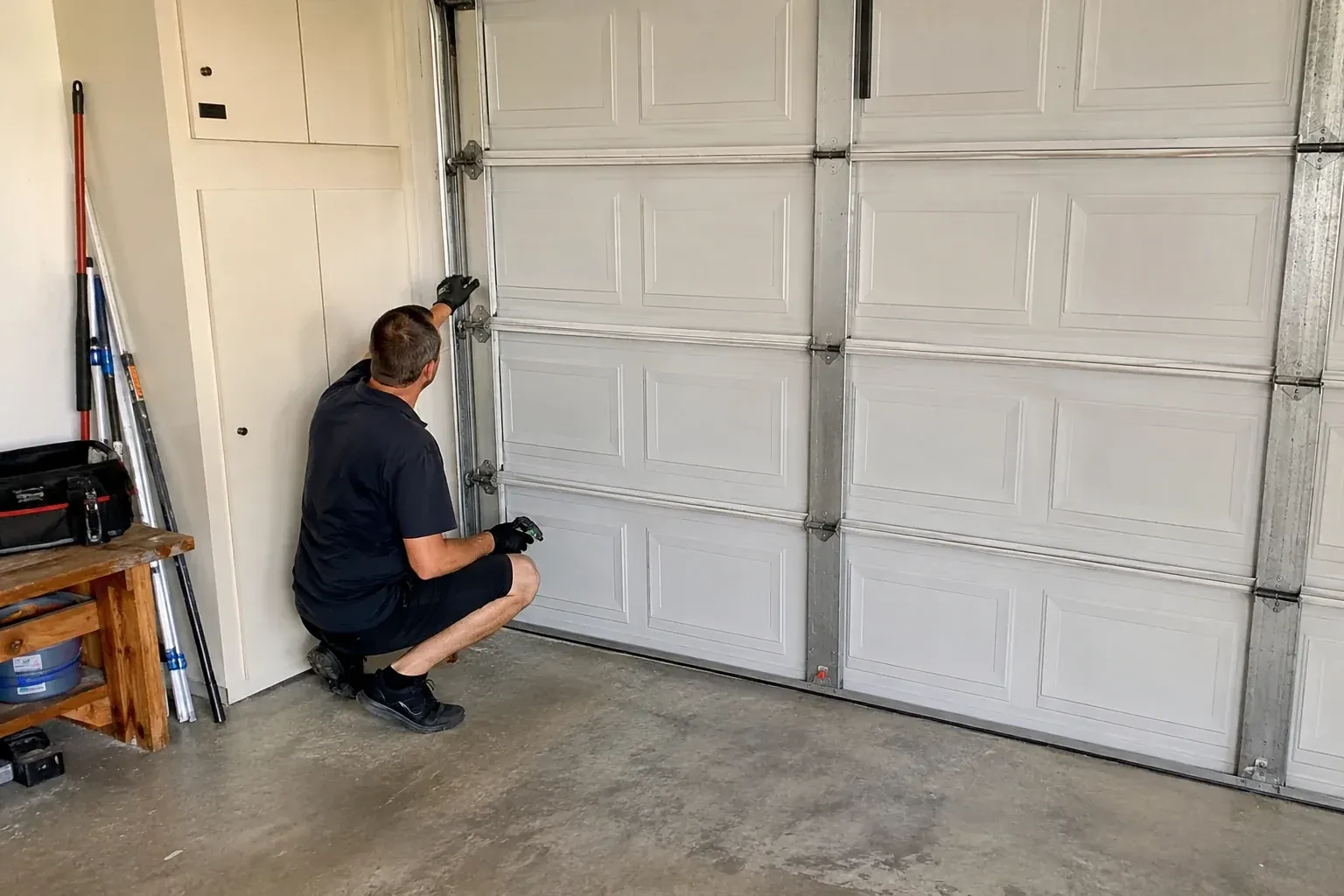
When a vehicle or something heavy has struck the door, the technician starts at the mark and works outward along the force's path. A dented bottom section can push a roller sideways in its track, bend the track itself where the roller was, shift a bottom bracket and change how that cable sits on its drum. The hinges beside the impact are checked for splits and the strut for a kink. The door is then observed through a cycle to see whether it now twists or hesitates at the point of damage. The finding is written up as cosmetic, hardware repair, section replacement or a counterbalance that needs resetting, so you can decide with the whole picture in view.
- 2
Sorting the findings at the door
Before packing up, the technician walks you through what was found, in front of the door so each item can be pointed at. Findings are sorted into four groups: in good order, maintenance, planned repair, and stop-use. For each repair, you hear what the part does, why it matters and roughly what the work involves, so you can decide in your own time. If anything falls into the stop-use group, you are shown the reason and the door is left in a safe position with the opener disconnected until that item is corrected. The written record follows, with the model numbers, the measurements and the photographs.
- 3
Signs that call for a visit before the next scheduled one
A few things are worth a call the day you notice them: a door that hangs crooked or stops part-way; a cable that looks slack, frayed or wrapped where it should not be; a gap in a torsion spring coil; a door that suddenly feels heavy on the manual release; an opener that reverses for no reason after the photo eyes are wiped; or a deep dent, one from an impact, or one dragging in the track. In each case, leave the door as it is, keep people and vehicles clear, and use another door until it has been looked at. A small cosmetic dent that leaves the door running smoothly can wait for the planned appointment.
In the van
- Replacement hinge and track fasteners
- Lens cloth and cleaner
- Remote and keypad batteries
- Camera for findings
- Work light and inspection mirror
What affects the quote
- 1
What is stored around the door
Shelving under the spring shaft, bikes along the tracks or a car left inside slow the visual walk. Clearing the area beforehand keeps the inspection to its planned length.
- 2
A retest after repairs
When the report lists repairs, a short return visit to rerun the balance, reversal and photo-eye tests once the work is done is quoted as its own item.
- 3
Distance to the property
Travel is part of every visit. A property across town and one at the end of a rural road involve different driving time, and the quote reflects the trip.
Same fees day, night or weekend.
Garage Door Safety Inspection: questions
What happens if the report lists a stop-use item?
The door is parked in a safe position, usually closed, with the opener disconnected so nobody runs it by habit, and the reason is shown to you. The correction is explained and quoted as its own piece of work, and once it is done the door is retested through the balance, reversal and photo-eye checks before it goes back into daily service. Another door into the house or garage is used in the meantime.
What is the balance test and why does it matter?
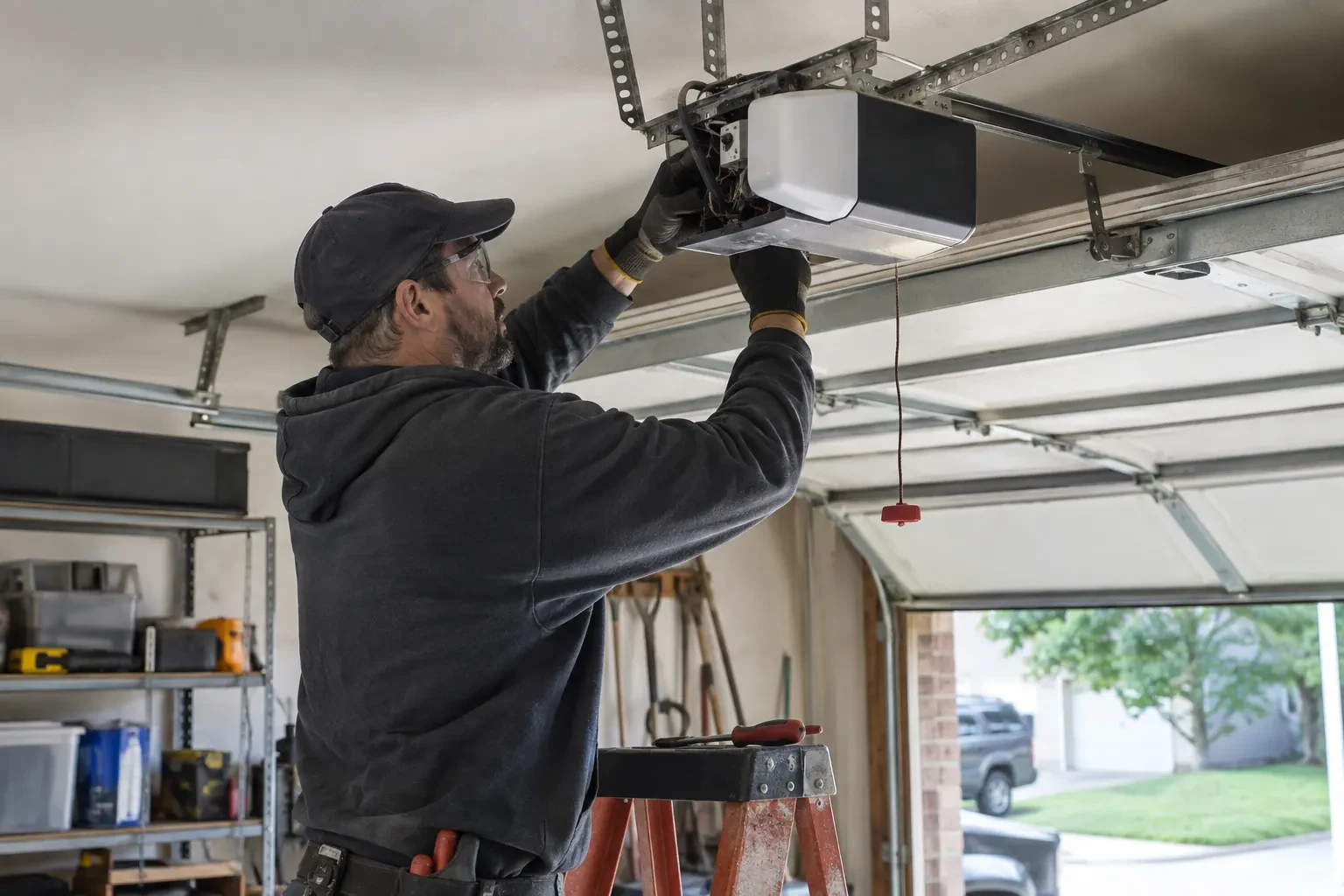
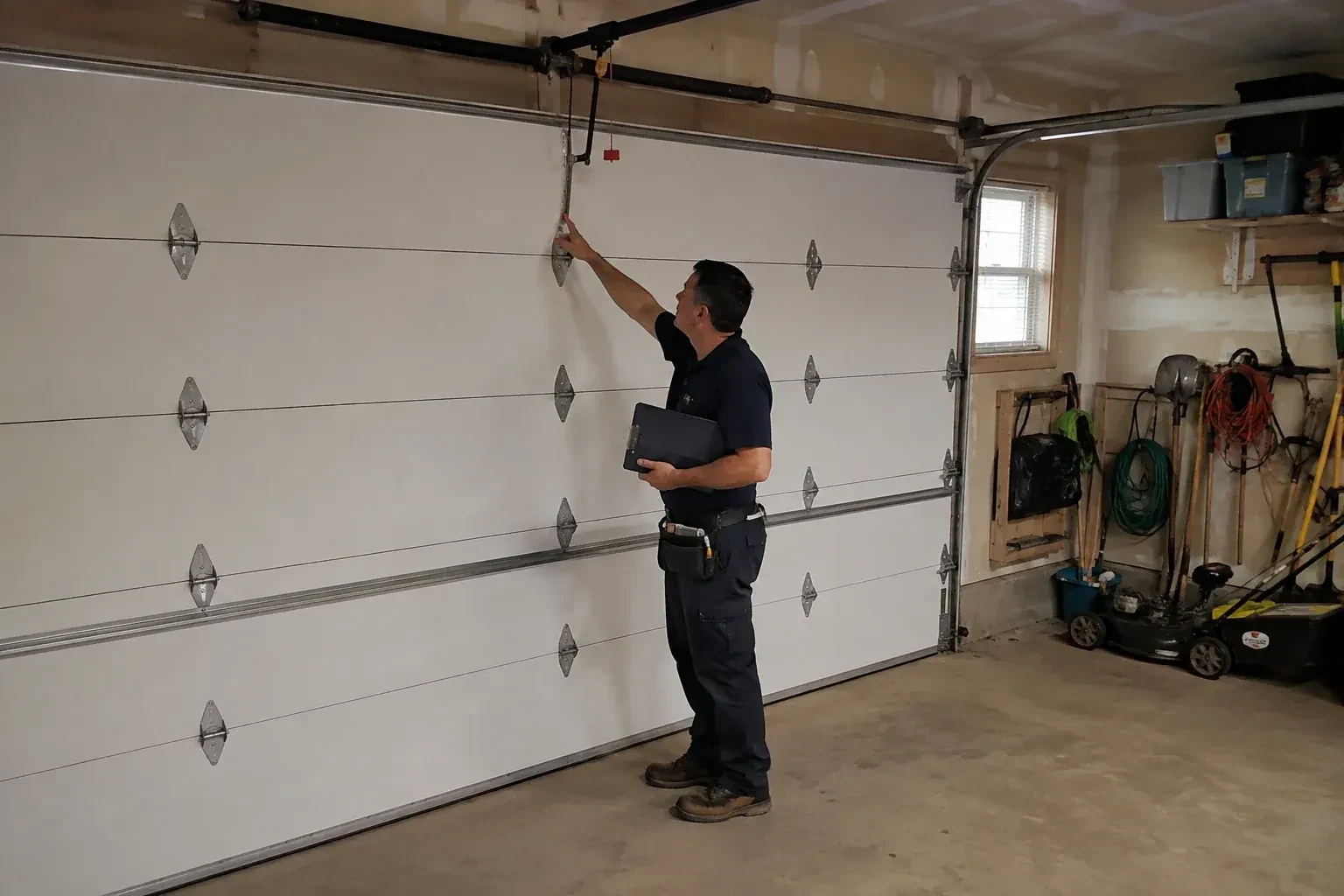
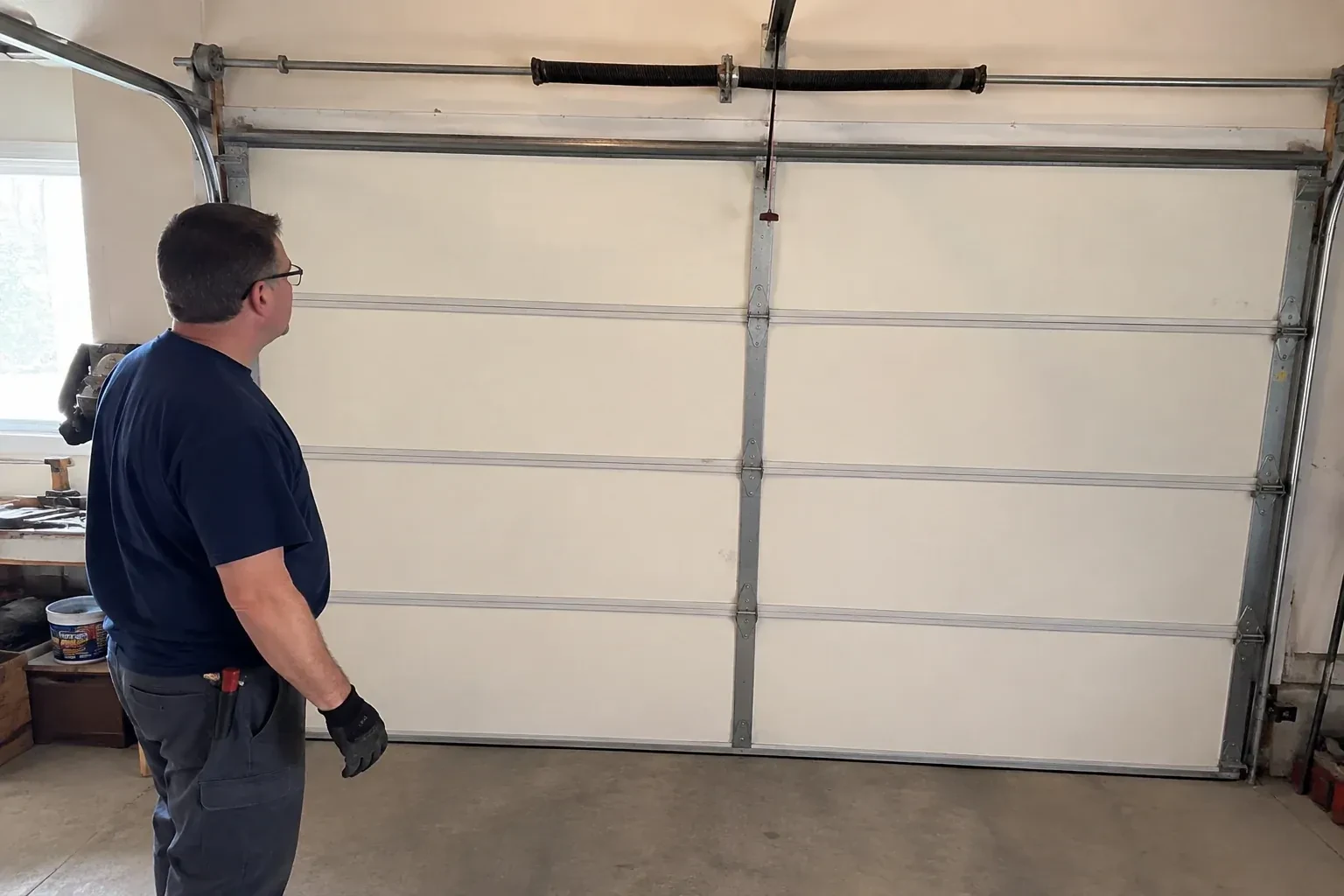
With the opener disconnected, the door is lifted by hand. If it moves with light effort and stays put at waist height, the springs are carrying its weight as designed. If it drifts up, sinks or feels heavy, the springs are out of step with the door and the opener has been doing the lifting. That strain shortens the opener's life and can defeat its reversal settings, which is why balance is checked first.
Can several doors be inspected in one visit?
Yes. A double garage with two doors, a detached garage plus an attached one, or a row of units in a townhouse complex can be worked through in a single appointment, with a separate record for each door and opener. Property managers often schedule the whole set each spring so every report carries the same date. Tell the office how many doors there are and where, so the time is set aside.
Repair & Maintenance
Bigger photo, sooner job: Emergency Book soon Plan ahead
 Plan aheadGarage Door Tune-Up
 EmergencyOff-Track Garage Door ResetA delivery van backed into the shop's overhead door this afternoon.
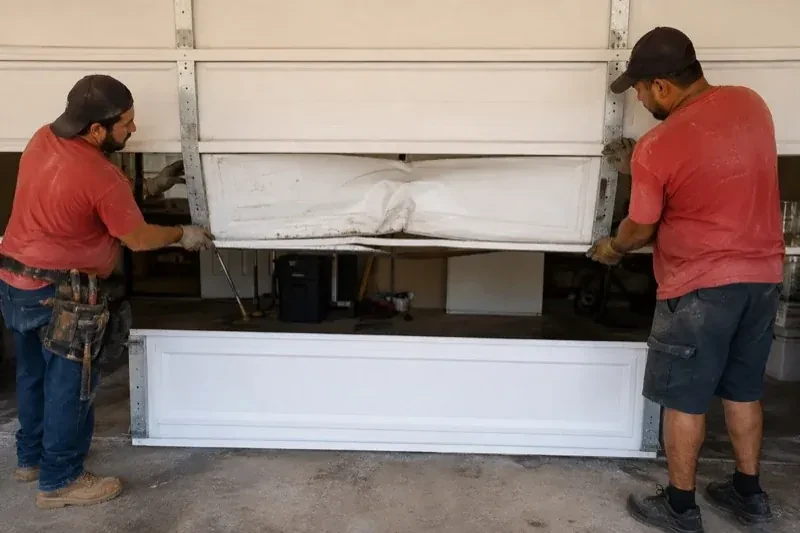 Book soonGarage Door Panel ReplacementRust has crept along the bottom edge of the lowest section.
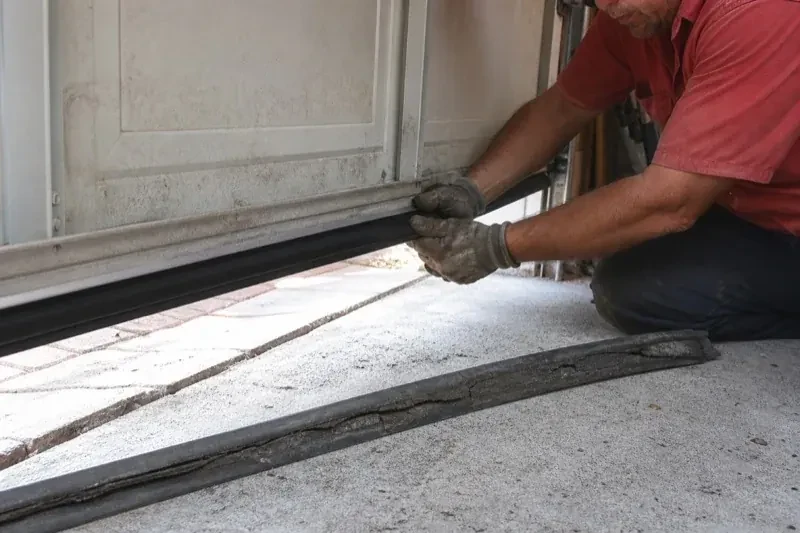 Plan aheadGarage Door Bottom Seal Replacement
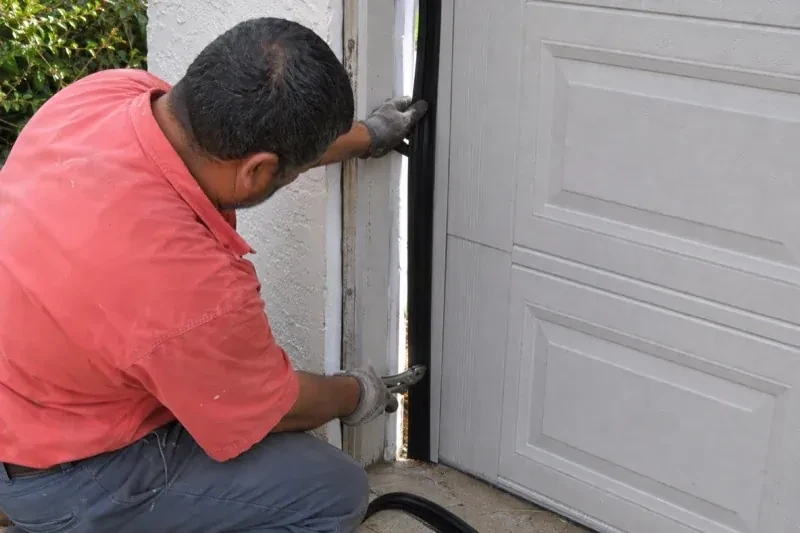 Plan aheadGarage Door Perimeter Weatherstrip
Garage Door Safety Inspection near you
Toronto, Ontario
Toronto information
- Town
- Toronto, Ontario
- In business
- 11 years
- Hours
- Open 24/7 · nights, weekends and holidays, same fees
- Phone
- (289) 806-4043
- Visits
- On-site assessment preferred. Request a visit or call.
What the census means at the door
58%
Older homes. About 58% of homes in Toronto were built in 1980 or earlier, according to the 2021 Census.
In a mature neighbourhood the garage door is often the single largest feature of the front elevation, so keeping the original look matters. Modern insulated doors come in raised-panel and carriage styles that echo the older designs while running on today's torsion hardware.
23%
Single-detached houses make up about 23% of homes in Toronto (2021 Census).
Where housing is mostly attached, the common garage entrance may be a rolling grille or heavy sectional door with access by fob or remote, managed by the property. We service these operators, safety edges and photo-eyes, and coordinate with management so residents keep their access throughout.
Open 24/7
Request a visit
During the power outage you pulled the red cord and tried to lift the door by hand.
Call now · open 24/7(289) 806-4043- On-site assessment preferred
- Same fees day, night or weekend
- 11 years in business