Book soon New Doors · Birch Cliff
Commercial Rolling Door Repair in Birch Cliff
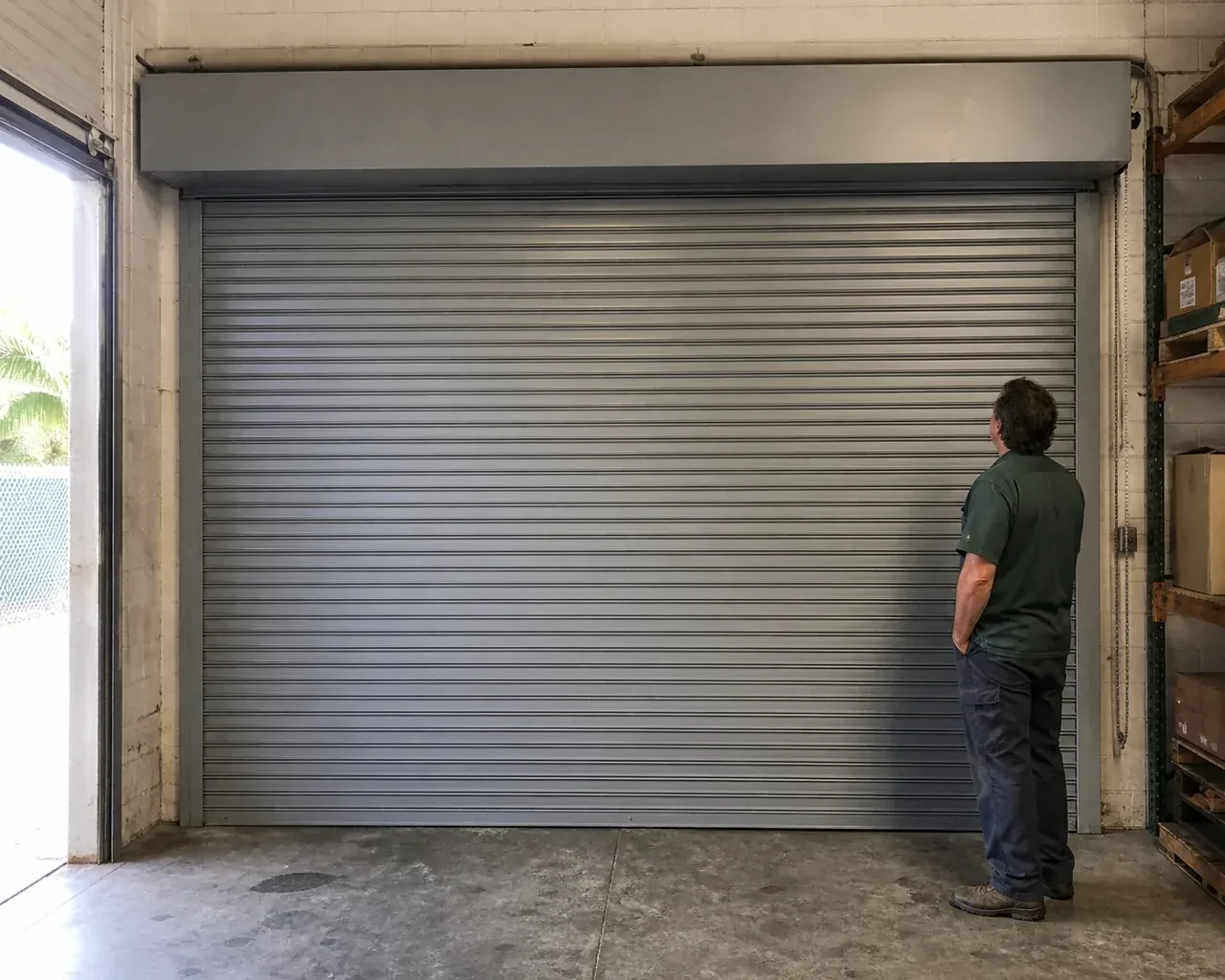
A metallic clatter now comes from inside the hood whenever the curtain coils. The sound follows each revolution, the travel has become jerky, and fine metal dust is visible near one bracket and bearing.
Call now · open 24/7(289) 806-4043In plain words
Powered rolling doors add controls and protective devices to the mechanical assembly. A closing complaint may begin at the control station, interlock, sensing edge or photoelectric sensor rather than inside the operator. The visit checks the curtain's free movement first, then follows control response, brake action, limit settings, manual disconnect or hoist and external protection suited to that system. Compatible repairs are completed with the operating instructions in hand. Testing covers normal commands, stopping points, manual operation and protective-device response so staff understand how the restored door is intended to behave.
How the visit goesThe labelled rolling fire door still moves from its control, yet the release assembly and closing path were disturbed during nearby work. The facility needs the repair and return-to-service record handled as a fire-door scope.
Commercial Rolling Door Repair · Birch Cliff
How the visit goes
- 1
Follow the powered control chain
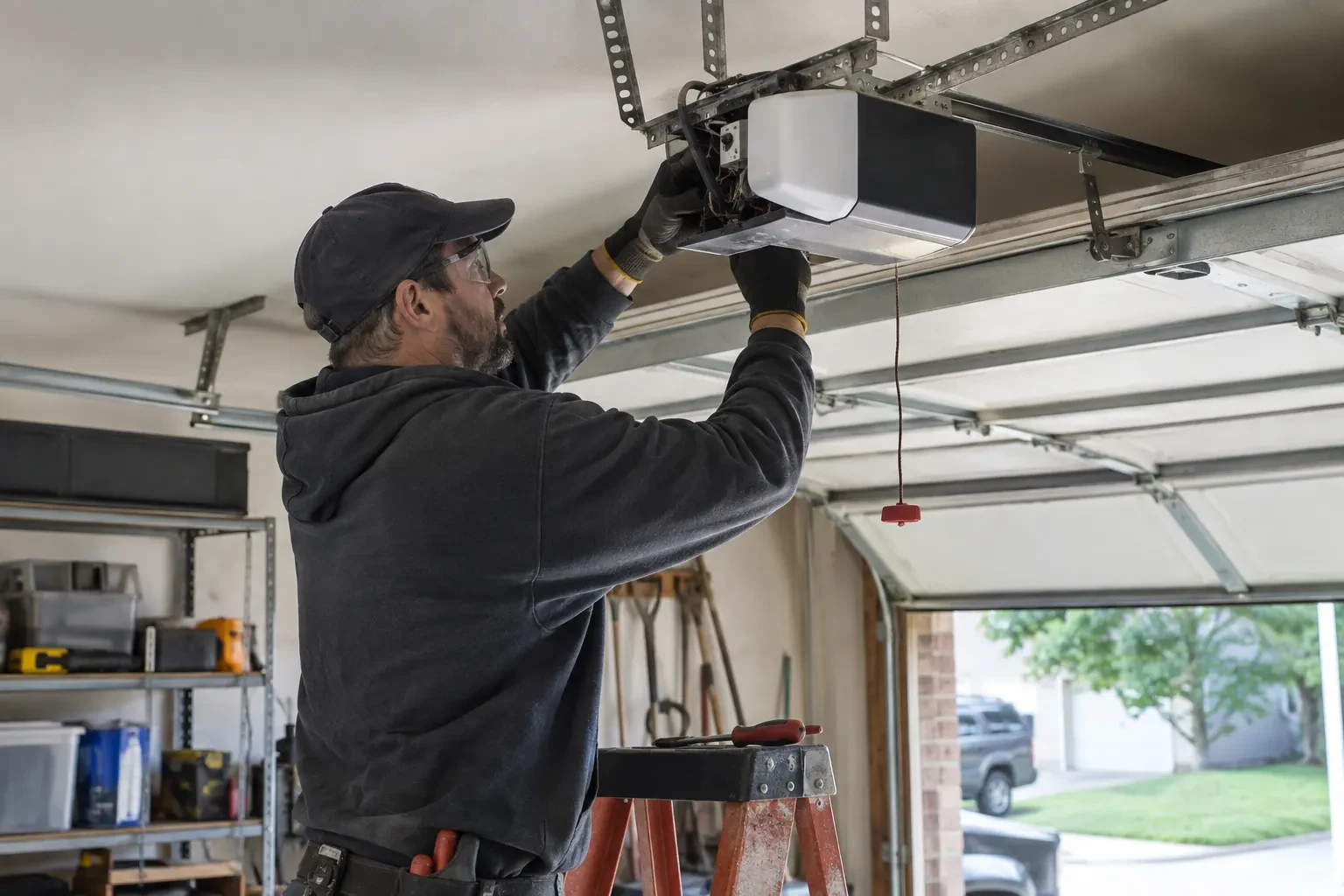
For a motor-operated door, the assessment moves from command to motion in a defined sequence. The control station, key switch or access input is observed; lock and pass-door interlocks are checked where present; then the operator brake, drive, limits and manual hoist or disconnect are reviewed. Photoelectric sensors and sensing edges are identified by function rather than assumed to be interchangeable. Their mounting, wiring condition, alignment and response are checked against the operator information. This approach shows whether a stopping complaint comes from protective logic, a control fault, limit setting or resistance in the door itself.
- 2
Realign guides and attachments
Bent or shifted guides are corrected from measured reference points rather than by forcing the curtain through them. The technician establishes the required gap, plumb and parallel relationship, then straightens or replaces authorised guide components and restores loose wall-angle or bracket fasteners. Bellmouths are shaped to receive the curtain cleanly, and guide stops are secured. If damaged masonry, steel framing or a moved jamb prevents reliable attachment, that condition is separated for the appropriate building work. Once the supports are sound, the curtain is centred and moved gradually to confirm even clearance on both sides.
- 3
Controls with clear, separate functions
The handover distinguishes the wall station, key control, access input, photoelectric protection, sensing edge and any vehicle-detection accessory. Each device is demonstrated according to its role, and staff see the applicable response during a controlled test. Sensor lenses remain visible and clean, cables stay protected, and stored materials are kept outside the beam path. Private access codes are retained by the facility rather than written in a service record. With the functions separated clearly, a blocked beam can be handled as a housekeeping clue while an unusual operator response can be reported with useful detail.
In the van
- Sensing edge and controls
- Hand-chain hoist components
- Roller chain and sprockets
- Counterbalance spring assembly
- Guides and bellmouths
What affects the quote
- 1
Testing and documentation
Normal cycles, manual operation, protective responses, fire-door procedures and facility records vary by assembly. The proposal can name the demonstrations, measurements and written results included at handover.
- 2
Powered operator repairs
Brake, motor, reduction, sprocket, roller chain, limits and internal controls are assessed separately. The operator's identity and compatibility with the balanced door guide part selection.
- 3
Electrical and structural coordination
Supply faults, building wiring, damaged framing or uncertain anchors may involve another responsible trade or professional. The rolling-door quote separates that coordination from authorised door-system tasks.
Same fees day, night or weekend.
Commercial Rolling Door Repair: questions
How is a rolling fire door repair different?
A labelled fire door is a closure in a fire separation, so labels, listed construction, compatible components, release hardware, clear closing path and required records shape the work. Routine operating repair and specialised fire-door inspection or release testing are defined explicitly. Substitutions are based on assembly information rather than appearance or approximate fit.
Why is the bottom bar rising crooked?
An angled bottom bar can point to a shifted curtain, damaged slats, unequal guide friction, a moved barrel, impact at one guide or a counterbalance issue. Measurements at the sill, guides and brackets help separate those causes. Cycling is kept controlled because repeated powered movement can pull a minor tracking problem farther sideways.
Can a door stuck partly open be repaired in that position?
The position becomes part of the repair plan. Traffic is controlled, the curtain is supported or secured, and its weight and stored spring energy are managed before a guide or drive component is released. Depending on the fault, the door may be brought to a safer working position under control before the component repair begins.
Commercial Rolling Door Repair near you
Toronto, Ontario
Birch Cliff information
- Town
- Birch Cliff, Toronto, Ontario
- In business
- 11 years
- Hours
- Open 24/7 · nights, weekends and holidays, same fees
- Phone
- (289) 806-4043
- Visits
- On-site assessment preferred. Request a visit or call.
What the census means at the door
58%
Older homes. About 58% of homes in Toronto were built in 1980 or earlier, according to the 2021 Census.
Older garages are frequently used as workshops or storage as much as parking, which means the door opens many times a day and collects dust on the sensors. Sealed rollers, protected photo-eyes and a tune-up schedule suit that pattern well.
23%
Single-detached houses make up about 23% of homes in Toronto (2021 Census).
Townhouse and condo owners often share responsibility for the door with a board or property manager, so we provide a clear written report after each visit: what was found, what was replaced and what is likely to need attention next, ready to pass along.
Open 24/7
Request a visit
A metallic clatter now comes from inside the hood whenever the curtain coils.
Call now · open 24/7(289) 806-4043- On-site assessment preferred
- Same fees day, night or weekend
- 11 years in business